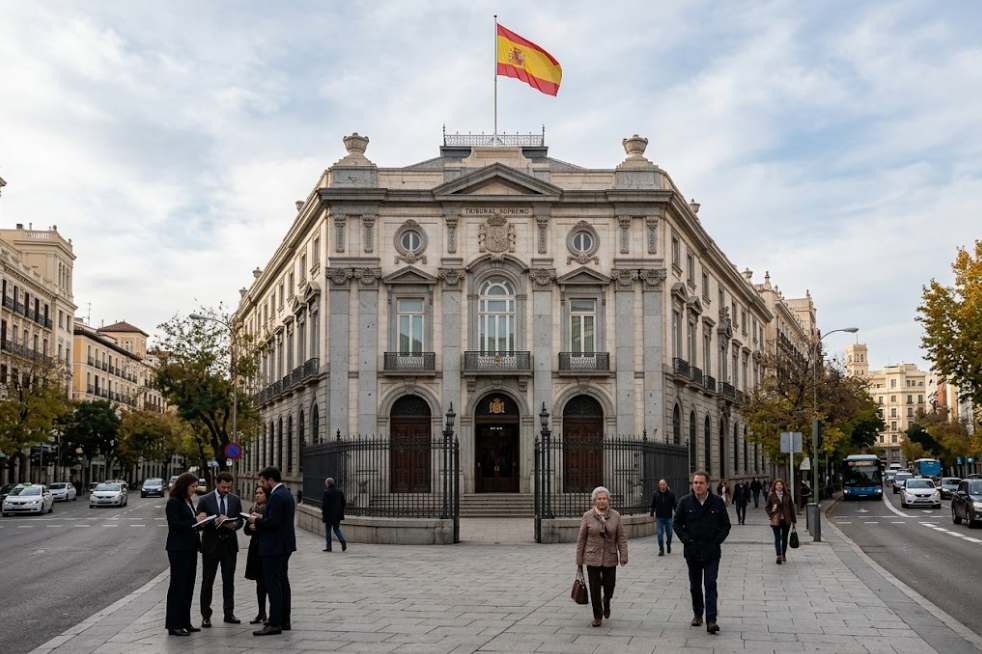

Spain’s Supreme Court Maintains Voting Restrictions for Some Citizens Granted Nationality Under the Grandchildren’s Law
Spain’s Supreme Court has refused to lift the suspension affecting the voting rights of certain Spanish citizens who acquired nationality under the country’s so-called Grandchildren’s Law (Ley de Nietos), despite the upcoming general elections scheduled for November 29, according to the information provided.

The ruling leaves thousands of Spanish citizens living abroad uncertain about their eligibility to vote. The key distinction is between those who can provide documentary evidence that their ancestors went into exile under the legally recognised circumstances and those whose eligibility was based on an administrative presumption of exile.
The dispute highlights a difficult balance between protecting the right to vote and ensuring the accuracy and integrity of Spain’s electoral register. According to figures cited in the proceedings, the measure affects 163,020 people registered in the Electoral Census of Absent Residents (Censo Electoral de Residentes Ausentes, or CERA). However, the restrictions do not necessarily apply in the same way to every individual, as eligibility depends on the circumstances of each case and the requirements set out by the court.

What Has Spain’s Supreme Court Decided?
The Supreme Court’s Contentious-Administrative Chamber has maintained the precautionary measures imposed in September. It rejected requests from the State Attorney’s Office (Abogacía del Estado) and the Public Prosecutor’s Office (Fiscalía) to reconsider the suspension following the announcement of the general elections.
Both institutions argued that the limited time remaining before election day made it practically impossible to review the affected electoral registrations.
The court disagreed. It maintained that the administration could not rely on the lack of time as justification for failing to comply with a judicial order, particularly when the administration’s own inaction had contributed to the problem.
The dispute centres on the application of the Grandchildren’s Law, which established a route to Spanish nationality for certain descendants of Spaniards who went into exile for political, ideological or other legally recognised reasons, including persecution related to sexual orientation.
More specifically, the proceedings concern an instruction issued by Spain’s Ministry of Justice that presumed the status of exile for Spaniards who left the country between July 18, 1936, and December 31, 1955.
The Supreme Court considers that the circumstances surrounding the affected registrations must be clarified before the electoral process proceeds without the uncertainty identified by the judges.
For now, the suspension remains in place.
Who Can Vote in the November 29 Elections?
The ruling does not mean that all 163,020 people identified in the proceedings are automatically barred from voting. The decisive question is whether they meet the conditions established by the court and can provide the required evidence.
According to the information provided about the ruling, the distinction is as follows:
| Voter’s circumstances | Implications for voting |
|---|---|
| The person can document their status as a descendant of Spaniards who went into exile under the legally recognised circumstances. | They may be eligible to vote if the relevant consular civil registry official certifies that they meet the court’s requirements. |
| The person’s registration relies solely on the administrative presumption that Spaniards who left the country during the specified period were exiles. | The suspension remains applicable unless the required conditions are established and the legal restrictions affecting their registration are resolved. |
Consular civil registry officials are responsible for verifying the relevant circumstances, including family relationships and the conditions surrounding an ancestor’s loss or renunciation of Spanish nationality, in accordance with the criteria described in the ruling.
This distinction is important because holding Spanish nationality does not, by itself, resolve the specific question raised in these proceedings: whether an electoral registration affected by the suspension satisfies the requirements for voting in the upcoming elections.
Citizens whose eligibility is uncertain should consult the Spanish consulate responsible for their registration and seek clarification of their individual circumstances.
Why Is the Grandchildren’s Law at the Centre of the Dispute?
The Grandchildren’s Law is the commonly used name for the nationality provisions contained in the eighth additional provision of Spain’s Law 20/2022 on Democratic Memory.
The legislation established routes to Spanish nationality for several categories of people, including certain individuals born abroad whose parents or grandparents were originally Spanish and lost or renounced their nationality as a consequence of exile.
The law also covers other circumstances, including certain children born abroad to Spanish women who lost their nationality by marrying foreign nationals before the Spanish Constitution entered into force in 1978.
The current legal dispute should not be confused with the repeal of the law or the general cancellation of nationality granted under its provisions.
Instead, the proceedings concern the suspension of certain electoral registrations and the criteria used to determine whether the people concerned qualify to exercise their voting rights.
The suspension of voting rights in this case does not, by itself, mean that Spanish nationality has been revoked. The question of nationality must be distinguished from the specific electoral restrictions under consideration.
Can the Administration Comply With the Court’s Order Before November 29?
The time available before election day is one of the central difficulties in the case.
Following the announcement of the elections, the State Attorney’s Office argued that reviewing the affected registrations within the remaining period was not feasible. The Public Prosecutor’s Office supported the request to reconsider the restrictions so that eligible descendants of exiles could vote.
The Supreme Court rejected that argument and placed responsibility on the administration for failing to produce the required breakdown of the affected registrations.
The judges’ reasoning is that an authority cannot claim that compliance with a judicial order has become materially impossible when its own failure to act contributed to creating that situation.
The ruling therefore leaves the administration facing two related challenges: establishing which registrations meet the required conditions and doing so within the timetable of an approaching election.
What Must Be Done to Implement the Ruling?
The process requires the identification of affected voters and the verification of the documentation supporting their registrations.
The principal steps include:
- Identifying the affected registrations. The administration must determine which individuals fall within the scope of the suspension.
- Reviewing supporting documentation. The relevant authorities must distinguish cases supported by evidence of qualifying exile from those relying solely on the administrative presumption.
- Obtaining consular certifications. Officials must verify the relevant family history and other circumstances required by the court.
- Applying the applicable electoral restrictions. The authorities must determine which registrations satisfy the court’s requirements and how the ruling affects each individual’s eligibility to vote.
These steps describe the practical work involved in implementing the decision; they do not establish that the review has been completed or that every case can be resolved before election day.
The information available for this report does not establish a definitive completion date for the checks. It would therefore be premature to claim that the administration will necessarily finish reviewing every affected registration before the elections.
Why Has the Supreme Court Prioritised Electoral Register Accuracy?
The judges have emphasised the importance of maintaining an electoral register that meets standards of accuracy, reliability, equality, objectivity and transparency.
In their assessment, uncertainty surrounding the affected registrations justifies maintaining precautionary measures until the relevant circumstances have been clarified.
The court’s position is that the public interest in protecting the integrity of the electoral process takes precedence, in this specific procedural context, over the immediate exercise of voting rights by individuals whose registrations remain under scrutiny.
However, the decision raises a broader legal and democratic question. The right to vote is a fundamental right recognised by the Spanish Constitution, and restrictions on its exercise have serious consequences for the individuals concerned.
The challenge is to protect the reliability of the electoral register without unnecessarily excluding citizens who can demonstrate that they meet the legal requirements.
Can the Supreme Court Suspend the Exercise of a Fundamental Right?
The Supreme Court maintains that it can adopt precautionary measures within the scope of administrative litigation when the legal requirements for doing so are met.
It distinguishes between deciding whether the Grandchildren’s Law itself is constitutional and examining the legality of the administrative instruction that presumed exile for certain people who left Spain during a specified period.
According to the court’s reasoning, the proceedings concern whether the administrative measure should remain suspended while the underlying legal dispute is resolved, rather than a general ruling invalidating the nationality legislation.
The Constitutional Court has a separate role in safeguarding the Constitution and deciding constitutional matters within its jurisdiction. The involvement of fundamental rights does not automatically prevent other courts from adopting precautionary measures within their respective legal powers.
Nevertheless, the distinction between interim measures and a final judgment is essential. Maintaining a suspension does not, on its own, resolve every legal question concerning the nationality provisions or the eligibility of all affected citizens.
Affected Citizens Will Be Able to Participate in the Proceedings
The Supreme Court has also addressed a procedural concern: the citizens affected by the suspension had not been formally called to participate in the proceedings.
To address this issue, the court has ordered the decision to be published urgently in Spain’s Official State Gazette (Boletín Oficial del Estado, or BOE). It has also instructed consular authorities to display the decision on their noticeboards.
The purpose is to allow affected individuals to join the administrative litigation as co-defendants and submit arguments concerning the precautionary measures adopted in September.
This opportunity does not automatically lift the suspension or guarantee an individual the right to vote in the upcoming elections. It does, however, provide a route for affected citizens to present their position before the court.
People who believe they may be affected should monitor communications from their Spanish consulate and retain documents relating to their nationality, electoral registration and family history.
Where necessary, they should seek clarification from the relevant consular authorities about the evidence required and the procedural options available to them.
The Decision Was Not Unanimous
The Supreme Court’s decision was not unanimous. Judge Alicia Millán issued a dissenting opinion arguing that the State Attorney’s Office’s request should have been granted.
Her central argument was that the announcement of a fixed election date introduced a new and decisive circumstance into the proceedings.
In her view, excluding eligible voters from an election could cause harm that would be impossible to reverse once voting had taken place.
The dissenting judge noted that when the court adopted the original precautionary measures in September, the underlying legal dispute could still have been resolved before an election took place. The announcement of the November 29 vote changed the practical consequences of maintaining the suspension.
The disagreement illustrates the competing considerations at the heart of the case: protecting the reliability of the electoral register and preventing potentially eligible citizens from losing the opportunity to participate in a specific election.
Both positions recognise the importance of the electoral process, but they differ on how the risks should be balanced when the time available for administrative checks is limited.
Editorial Analysis: Protecting Electoral Integrity Without Undermining Voting Rights
The dispute highlights the importance of effective administration when the exercise of fundamental rights depends on accurate public records.
A reliable electoral register is essential to democratic elections. At the same time, citizens who meet the legal requirements should have a meaningful opportunity to exercise their right to vote.
In our assessment, the immediate priority should be to complete the necessary checks as efficiently as possible, establish clear criteria for consular officials and provide affected citizens with accessible information about their individual circumstances.
Administrative delays should not become an indefinite obstacle for people who can demonstrate that they qualify under the applicable law. Equally, the administration must comply with judicial orders and ensure that electoral registrations meet the relevant legal standards.
The Supreme Court’s decision does not settle every aspect of the underlying dispute, nor does it establish that all citizens who acquired nationality under the Grandchildren’s Law are ineligible to vote.
The immediate question is whether the required checks can be completed in time and whether affected citizens will have an effective opportunity to establish their eligibility before the election.
Until the relevant authorities clarify the position of individual voters and the legal proceedings progress, the practical consequences of the ruling will remain a matter of concern for Spanish citizens living abroad.
Frequently Asked Questions
Are all 163,020 people affected by the ruling prohibited from voting?
Not necessarily. The figure refers to people identified in the proceedings in connection with the Electoral Census of Absent Residents. The implications for each voter depend on the applicable requirements, the evidence available and the effect of the suspension on their registration.
Does the ruling cancel Spanish nationality obtained under the Grandchildren’s Law?
No. The suspension concerns voting rights in the context of the proceedings. It does not, by itself, revoke Spanish nationality or invalidate all nationality grants made under the law.
What should affected citizens do?
They should contact the Spanish consulate responsible for their registration, review any official communications and retain documents establishing their nationality and relevant family history. The ruling also provides an opportunity for affected individuals to participate in the judicial proceedings and submit arguments.
Is the administration guaranteed to complete the checks before election day?
No such guarantee is established by the information available for this report. The Supreme Court has rejected the argument that the lack of time justifies non-compliance with its order, but that does not prove that all necessary checks will be completed before the election.
Where can readers check the legal framework?
The principal legal references include Spain’s Law 20/2022 on Democratic Memory, the relevant instruction on nationality options issued by the Directorate-General for Legal Security and Public Faith, and the Organic Law on the General Electoral System. The specific Supreme Court ruling should also be consulted when its official text is available.
Official Sources
- Official State Gazette (BOE) — Law 20/2022 of October 19, on Democratic Memory. Read the legislation.
- Official State Gazette (BOE) — Instruction of October 25, 2022, of the Directorate-General for Legal Security and Public Faith. Read the instruction.
- Official State Gazette (BOE) — Organic Law 5/1985 of June 19, on the General Electoral System. Read the legislation.
Contacto: info@econoticia.es